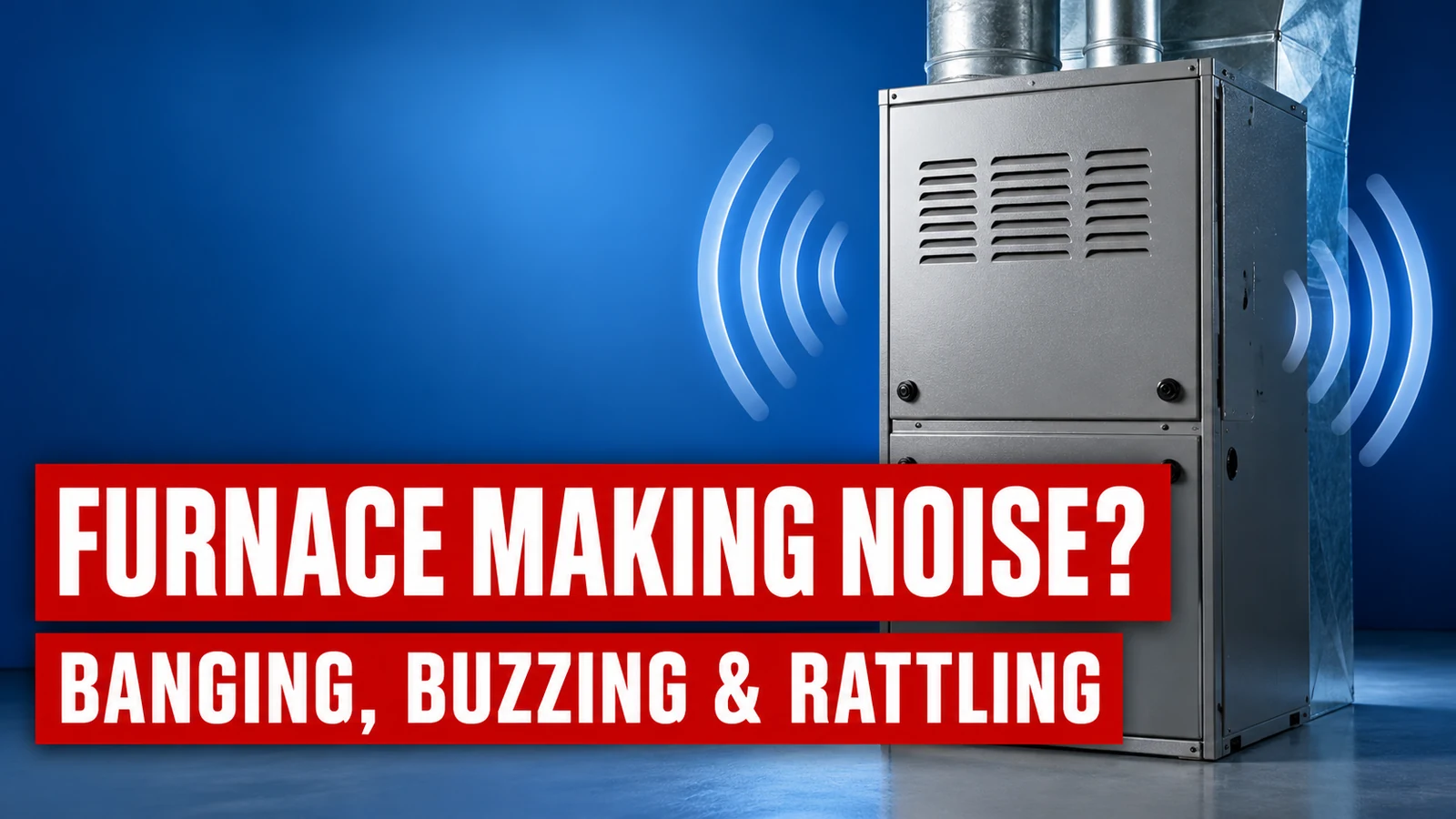
A furnace making noise may be reacting to normal metal expansion, or it may have an ignition, electrical, airflow, or blower problem. The sound alone cannot identify the cause. Its timing, location, volume, and pattern help determine whether you are hearing ordinary duct movement or a warning that needs professional attention.
Safety first: If you smell natural gas or suspect a leak, leave immediately. Do not use switches, phones, or electronics inside, and do not start a nearby vehicle. From outside at a safe distance, call 911 or your gas utility. If a carbon monoxide alarm sounds, move everyone outside to fresh air, call 911, account for everyone, and do not reenter until emergency responders say it is safe.
These steps follow emergency guidance from Oklahoma Natural Gas and the U.S. Consumer Product Safety Commission. Carbon monoxide has no color or odor, so never wait for an unusual smell before responding to a CO alarm.
When and Where Does the Noise Happen?
Before assigning meaning to a strange furnace sound, note three details:
- Timing: Does it occur at startup, after the burners shut off, while the blower runs, or throughout the cycle?
- Location: Is it coming from the furnace cabinet, a nearby duct, or a supply register in another room?
- Pattern: Is it a single soft pop, a steady buzz, an intermittent rattle, or a sharp boom?
A light click before ignition and a low operating hum may be normal. Sheet-metal ducts may also tick or pop as they warm, cool, expand, and contract. Trane’s furnace-noise guidance distinguishes those ordinary sounds from louder buzzing and banging that can indicate a problem.
The most important distinction is between a mild pop in the ductwork and an explosive bang at the furnace during ignition. They can sound similar from another room, but the possible causes and urgency are very different.
| Noise | What it may mean | What to do |
|---|---|---|
| Soft ticking or popping in ducts | Sheet metal expanding or contracting as temperatures change | Observe the timing and location; schedule service if it becomes loud, frequent, or new |
| Bang or boom at the furnace during startup | Possible delayed ignition or another combustion-related fault | Stop repeatedly testing the system and arrange prompt professional service |
| Loud or persistent buzzing | Electrical, blower, transformer, applicable capacitor, or loose-component issue | Do not open panels or attempt electrical work; have the system assessed |
| Rattling | Loose ductwork or cabinet vibration; possibly a loose blower-related component | Note where it occurs; seek service if it is persistent, worsening, or coming from the furnace |
| Whistling | Airflow restriction involving a filter, grille, vent, or duct | Check only accessible items such as the visible filter and unblocked grilles |
| Squealing or grinding | Worn bearings, friction, or another blower or mechanical problem | Turn the system off if safe to do so when the sound is severe or accompanied by odor, weak airflow, or breaker trips |
Banging or Booming at Startup
A furnace banging noise requires context. A modest clang from a register shortly after the heat starts may be ductwork moving as warm air changes the metal’s temperature. That is different from a sharp bang or boom centered at the furnace as it tries to ignite.
A startup boom may indicate delayed ignition, meaning fuel has not ignited as intended. Both Trane and Carrier advise professional attention for loud ignition-related banging.
Do not keep cycling the thermostat to reproduce the sound. Repeated testing does not make the problem easier to diagnose safely. Avoid opening the cabinet, inspecting the flame, cleaning burners, or attempting gas-valve or ignition work.
If the bang occurs at the furnace during startup, shut the system down if you can do so without entering an unsafe area, then request professional furnace repair in the Tulsa area. If you smell gas or suspect a leak, leave without operating switches or the thermostat.
Buzzing or Humming
A quiet, consistent hum is common when a furnace is operating. A new, loud, harsh, or intermittent furnace buzzing noise is different.
Possible sources include a transformer, loose component, blower assembly, or electrical part. Some equipment uses a capacitor, but not every motor or furnace design does. The sound therefore cannot confirm that a capacitor—or any other specific part—has failed.
Buzzing accompanied by a burning odor, repeated shutdowns, weak airflow, or a tripped breaker is a stronger reason to stop using the system and call for service. Carrier notes that blower repair can involve high-voltage wiring and should be handled by a trained professional in its blower motor overview.
Do not remove furnace panels, touch wiring, test electrical parts, reset a repeatedly tripping breaker, or attempt capacitor replacement. If the furnace is buzzing and there is also an unusual odor, use Capehart’s guide to a furnace that smells like burning for further context. Smoke, sparking, or fire calls for moving away from danger and contacting emergency services, not troubleshooting.
Rattling or Vibrating
A furnace rattling noise can begin outside the furnace itself. Loose ductwork, a vibrating register, or an exterior cabinet panel may rattle as the blower moves air. A minor vibration is not automatically an emergency, but a new, persistent, or increasingly loud rattle should not be ignored.
When the sound comes from inside the cabinet, a loose blower-related component is one possibility. Grinding, banging, or squealing can also accompany worn bearings or mechanical movement, according to Carrier’s blower guidance. Older belt-driven systems may develop belt-related noise, but many newer systems do not use that design.
The blower circulates conditioned air for the home, so a blower-related rattle may occur during heating, cooling, or fan-only operation. If you have already noticed the same sound during cooling or fan-only operation, tell the technician. Do not switch modes or restart equipment simply to reproduce a concerning noise.
Routine furnace maintenance provides an opportunity for a technician to assess the equipment. It is not a substitute for a repair visit when a new, severe noise has developed.
Whistling, Squealing and Repeated Clicking
Banging, buzzing, and rattling are common descriptions, but homeowners may also hear:
- Squealing: Sometimes associated with bearings or, in older belt-driven designs, a belt.
- Grinding: May indicate friction or wear within a blower or motor assembly.
- Whistling: Can result from restricted airflow at a dirty filter, blocked grille, vent, or duct.
- Repeated clicking: A single pre-ignition click may be normal, while repeated clicking with failed starts needs assessment.
- Rapid starting and stopping: This may be short cycling rather than a single noise problem.
If noise repeatedly accompanies brief operating cycles, see the overview of furnace short cycling. Persistent cycling, shutdowns, error codes, or unusual odors warrant professional diagnosis rather than trial-and-error adjustments. Carrier’s furnace service guidance also identifies changes in sound, odor, and heating performance as reasons to seek assessment.
Safe Checks Before Calling
Homeowner observations can make a service visit more efficient without exposing you to electrical, mechanical, or combustion hazards.
When there are no emergency warning signs:
- Note when you heard the sound: before ignition, at ignition, when the blower started, or after shutdown.
- Identify whether it seemed closest to the furnace, ductwork, or a particular register. Do not enter an unsafe area to locate it.
- Record the thermostat mode that was in use: heat, cool, or fan-only.
- With the system off, inspect an externally accessible filter only if doing so does not require opening furnace service panels. Replace a dirty filter with the correct type according to the equipment instructions. If access is unclear, leave it to the technician.
- Confirm that accessible supply registers and return-air grilles are not covered by furniture, rugs, or stored items.
- Record a short audio or video clip only when there is no gas odor, CO alarm, smoke, sparking, or other emergency indicator. Do not restart a concerning system to obtain a recording.
Do not run the furnace without a filter. Do not clean burners, test a flame or ignition sequence, adjust a gas valve, work on a limit switch, or replace electrical components.
When to Call Capehart
Arrange service promptly when the noise is new, loud, persistent, worsening, or clearly centered at the furnace. A startup boom, electrical buzzing, grinding, repeated shutdowns, weak airflow, breaker trips, burning odor, or an error code all strengthen the case for professional assessment.
Capehart Heating & Cooling is based in Kiefer and serves homeowners across Greater Tulsa. 24/7 service is available. The $99 service-call fee covers the visit to assess the problem; repairs are separate and quoted individually.
When you schedule, describe the sound, its timing, the thermostat mode, and any related symptoms. A clear description helps the technician prepare, but the cause and repair price need an assessment of the actual system.
Frequently Asked Questions
Is a popping furnace always dangerous?
No. A soft pop or tick in the ductwork may be normal expansion or contraction. A loud bang or boom at the furnace during ignition is different and needs prompt professional assessment.
Why does my furnace make noise at startup?
Furnace noise at startup can come from normal switching, duct expansion, the blower starting, or an ignition problem. The location and character of the sound matter; a sharp ignition boom should not be repeatedly tested.
Can a dirty filter make a furnace whistle?
Yes. A restricted filter can contribute to airflow noise, including whistling. Blocked return or supply grilles can also affect airflow. Use the correct replacement filter and follow the equipment manufacturer’s instructions.
Why does the furnace rattle when the AC runs?
The heating and cooling systems may share the same blower and ductwork. A blower, cabinet, register, or duct vibration can therefore be audible during cooling or fan-only operation as well as heating.
Should I turn off a noisy furnace?
For a suspected gas leak or CO alarm, leave immediately and call for emergency help from outside; do not approach or operate the equipment. For a severe noise or startup boom without emergency warning signs, stop using the furnace and turn it off only if safe to do so. Arrange professional service rather than restarting it to test the sound.