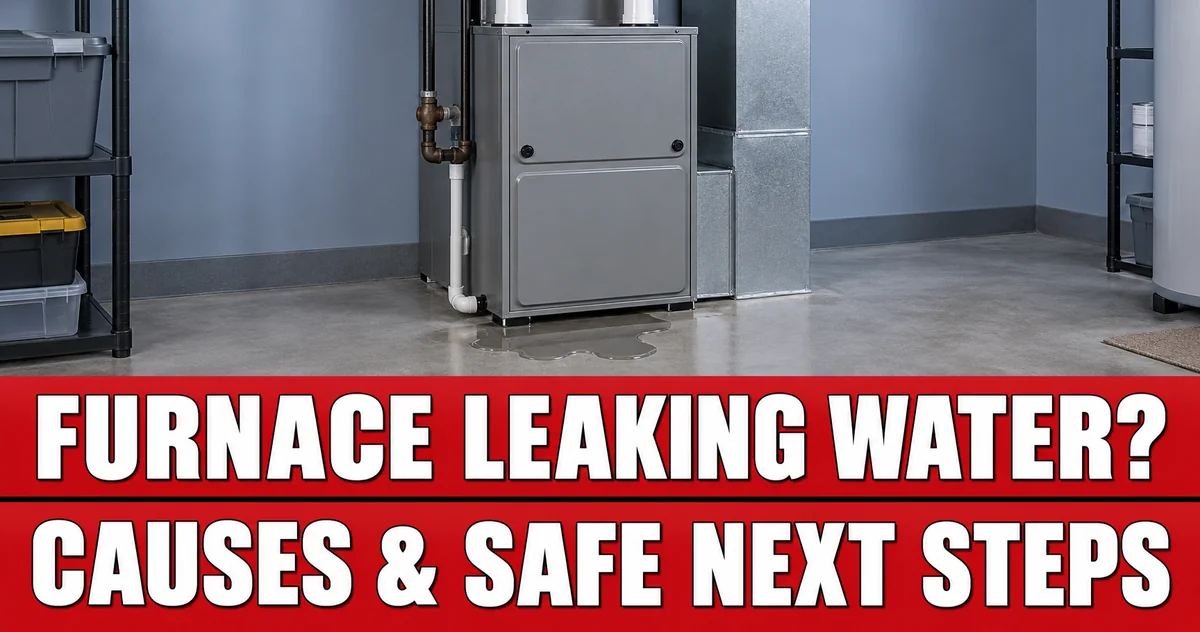
A furnace leaking water while the heat is on needs prompt attention. A high-efficiency condensing furnace normally makes condensate, but that water should leave through its designed drain path—not collect on the floor. A standard-efficiency furnace does not create heating condensate in the same way. The source could instead be a drain, pump, humidifier, cooling component, or nearby appliance. A puddle is a symptom, not proof of a clog, frozen line, failed pump, or cracked heat exchanger. This guide from Kiefer-based Capehart Heating & Cooling, serving the greater Tulsa area, explains the safest next step.
What Should You Do First?
Gas or carbon monoxide danger overrides leak steps. If you smell gas or hear hissing that suggests a gas leak, leave immediately with other occupants and pets. Do not operate the thermostat, switches, electronics, or a nearby vehicle, and do not use a flame. From a safe location outside, call 911 and the local gas utility, as Oklahoma Natural Gas advises. If a CO alarm sounds or anyone may have symptoms of CO exposure, move to fresh air, call 911 outside, and stay out until responders approve. The U.S. Consumer Product Safety Commission says never to ignore a CO alarm.
For a water leak with no gas or CO warning:
- If the thermostat is reachable from a dry, safe location, select System Off. This stops a normal heat call; it does not isolate electrical power.
- Keep people and pets away from standing water and wet HVAC or electrical equipment. Do not approach or touch wet equipment, panels, wiring, outlets, switches, disconnects, or breakers. Federal electrical-safety guidance supports staying clear of electrical products and wiring when you or the surface is wet.
- Contain water only if you can do so without approaching equipment, crossing a wet surface, or nearing electrical components.
- From a dry, safe position, note where water first appears and whether it follows heating. Take a photo only without moving closer.
Where Can the Water Come From?
The location of a puddle can help narrow the possibilities, but it cannot confirm a failed part. Several components—and even equipment unrelated to the furnace—can create nearly the same pattern. Start with the operating mode, equipment type, and first visible wet point.
Condensate That Is Not Draining
A condensing furnace, generally rated at 90% AFUE or higher, uses a secondary heat exchanger and produces water as it heats the home. Carrier explains that this condensate should travel through the furnace’s drainage system.
If water escapes instead, the condensate drain, trap, line, connection, or routing may be involved. A section exposed to freezing conditions is another possibility. Debris, ice, disconnection, damage, and an installation problem can look alike from the outside, so the puddle does not tell you which condition exists. Do not open the cabinet, clear the line, thaw anything, or add chemicals; the drainage arrangement is equipment- and installation-specific.
A Pump or Connection Problem
Some furnaces rely on a condensate pump when water cannot drain by gravity. Tubing, a connection, piping, or the pump may allow water to collect near the unit. Lennox lists pumps, traps, hoses, and cracked or disconnected drain components among possible sources. That list is not a remote diagnosis. Pump testing, resetting, line clearing, and replacement belong to a qualified technician.
A Whole-House Humidifier Leak
A furnace-mounted humidifier adds another water supply and drain near the heating equipment. Water can escape around its pad area, tubing, fitting, drain, or supply connection and make the furnace appear responsible. Trane includes whole-house humidifiers among common look-alike sources. Do not open or service the humidifier while tracing an active leak.
Another Source Nearby
An indoor air-conditioning coil is often installed with the furnace. It produces condensate during cooling, not during a normal heating cycle. A water heater, washing machine, utility sink, plumbing line, roof leak, or other nearby source can also send water toward the furnace.
Timing matters here. If the water appears while the AC runs or shortly after cooling, treat it as a cooling-side problem rather than assuming the furnace made it. If the source is unclear, note which equipment was operating and let the first visible point of water guide the on-site assessment.
A Less Common Internal Problem
Venting, a heat exchanger, or another internal component can sometimes be involved, but only professional testing can establish that. Water on the floor does not prove a cracked heat exchanger, a gas leak, or carbon-monoxide exposure. Do not remove panels, inspect internal furnace parts, or touch an exhaust pipe. Those actions add risk without producing a reliable diagnosis.
What Does the Timing Tell You?
Use only observations available from a dry, safe position. These patterns suggest where a technician may begin; none proves a cause.
| What you notice | What it may suggest—not prove | Safe next step |
|---|---|---|
| Water appears only during heating on a known condensing furnace | The condensate path, a connection, a pump, or freezing may be involved | Safely stop the heat call and arrange diagnosis |
| Water appears when a whole-house humidifier runs | The humidifier or its water or drain connection may be involved | Do not open or service it; arrange assessment |
| Water appears during or shortly after cooling | The indoor coil or AC drainage may be the source | Follow the guide to an AC leaking water inside |
| A furnace with a metal exhaust has water nearby | A nearby source or a less common furnace or venting issue may be involved | The vent may be hot; do not touch it, and arrange source identification |
| Water is near wiring or wet electrical equipment | There may be an immediate shock or fire hazard | Stay clear; do not touch equipment or a breaker, and obtain qualified help |
| The furnace stops or blows cold air after water appears | A safeguard or a separate fault may be involved | Do not reset or bypass anything; treat a furnace blowing cold air as a secondary symptom |
PVC intake and exhaust pipes can be a clue that equipment is condensing, while a metal exhaust can suggest a standard-efficiency furnace. Neither clue is definitive. The model and its manufacturer documentation control, and the venting should not be handled or altered.
Can You Keep It Running?
Continued heat is not an all-clear. Active or recurring water can damage the furnace and surrounding materials, and it may eventually reach electrical components. Do not keep restarting a furnace that stopped after water appeared, and never bypass a safety control.
If there is no gas or CO warning and the thermostat is safely reachable from a dry location, select System Off and arrange an assessment. Leave breakers, disconnects, gas valves, panels, and wet equipment alone. If reaching the thermostat would take you near water or wet electrical equipment, do not approach it.
Keep ordinary operation stopped until the source has been identified and the system is safe to use.
The appropriate next step is professional furnace diagnosis and repair, not a guess based on the puddle’s location. The technician can determine whether the furnace produced the water and what needs correction.
What Will a Technician Check?
The first task is to identify whether the equipment is condensing or non-condensing and locate the actual first point of water. Depending on the pattern and installation, the assessment may include:
- the condensate drain, trap, connections, pump, routing, and possible freeze exposure;
- the manufacturer-required drainage arrangement for the specific furnace;
- a whole-house humidifier and its nearby water and drain connections;
- the indoor cooling coil and pan, plus plumbing, appliances, or building-water sources nearby; and
- venting, controls, and internal furnace components when the observations call for further testing.
Safe details from the homeowner—whether heating or cooling was running, when the leak began, where it first appeared, and whether the furnace stopped—can make the visit more efficient. The on-site assessment determines the cause; no visible puddle can promise a particular finding or repair.
Can Maintenance Prevent Another Leak?
Routine furnace maintenance may reveal developing drainage, connection, pump, humidifier, venting, or operating concerns. It cannot guarantee that a leak will never occur.
An active leak belongs on the assessment and repair path first. Once its source has been identified and corrected, ask what preventive schedule fits the furnace, attached accessories, and installation.
Furnace Leaking Water FAQs
Is it normal for a furnace to leak water?
No. A condensing furnace normally produces water, but that condensate should leave through its designed drainage system. Water pooling beneath or escaping from the equipment is not the intended result. A non-condensing furnace does not make heat-mode condensate in the same way.
Why does a high-efficiency furnace make water?
A high-efficiency condensing furnace extracts additional heat from combustion gases in a secondary heat exchanger. As those gases cool, water vapor condenses. The resulting water is expected to drain away; an indoor puddle means the source and drainage path need assessment.
Can a clogged condensate drain make a furnace stop?
A drainage problem can be associated with a shutdown, especially where an overflow safeguard responds, but a stopped furnace does not prove the drain is clogged. Do not reset the furnace or bypass a safety. A technician can test the drainage and controls together.
Is water near my furnace coming from the AC?
It may be if water appears during air-conditioning operation or shortly afterward. The indoor cooling coil is often installed beside the furnace and produces condensate while cooling. During a heating cycle, a condensing furnace, humidifier, or nearby source becomes more relevant.
Does water mean the heat exchanger is cracked?
No. Water alone is not evidence of a cracked heat exchanger. A drain, pump, humidifier, cooling component, nearby plumbing source, venting concern, or another issue may be involved. Heat exchangers and combustion safety require professional instruments and inspection—not a conclusion drawn from a puddle.
Is a furnace water leak an emergency?
Many leaks need prompt HVAC assessment rather than 911. Leave and call emergency services for a gas odor or suspected gas leak, a CO alarm or possible exposure, fire, or an immediate electrical danger. Never approach standing water around electrical equipment.
Need Help With a Furnace Leak?
Capehart Heating & Cooling is based in Kiefer and serves the greater Tulsa area with 24/7 HVAC service. The $99 service-call fee covers the visit to assess the problem; any repair is priced separately. This is not a flat $99 repair price.
Request Furnace Service or call (918) 771-1218
For gas odor or hissing that suggests a gas leak, leave and call 911 and the gas utility from a safe location outside. For a CO alarm or possible exposure, move to fresh air and call 911 from outside. Emergency action comes before a routine service request.
Sources
- Carrier: Furnace Leaking Water
- Trane: Why Is My Furnace Leaking Water?
- Lennox: Why Is My Furnace Leaking Water?
- U.S. Consumer Product Safety Commission: Carbon-Monoxide Questions and Answers
- U.S. Consumer Product Safety Commission: Electrical Shock and Electrocution Safety
- Oklahoma Natural Gas: When You Smell Gas