Furnace Troubleshooting Guide
If you are asking, “Why is my furnace blowing cold air?” brief cool air at startup or between heating cycles can sometimes be normal—especially when the thermostat fan is set to ON. If the air stays cold, the system may need professional diagnosis. Check only visible thermostat settings, unobstructed vents and returns, and a routinely accessible filter. A gas odor or carbon-monoxide alarm overrides every troubleshooting step.
Capehart Heating & Cooling is based in Kiefer and serves homeowners throughout the greater Tulsa area. This guide helps you describe the symptom and choose a safe next step; it does not diagnose a failed part from cold airflow alone. If nothing happens when the thermostat calls for heat, use the separate furnace no-start checklist.
Quick Answer: Why a Furnace Can Blow Cold Air
Cold air from a vent is a symptom shared by several conditions. The timing and pattern help separate something that may be normal from a problem that needs testing, but they cannot identify a specific failed component.
May Be Normal
A brief draft at startup that becomes warm, or room-temperature air between heating cycles when the thermostat fan is set to ON.
Safe to Observe
Visible thermostat settings and messages, open supply vents and return grilles, and a manufacturer-designated filter that is routinely accessible without removing a furnace panel.
Stop and Get Help
Air remains cold, normal heat never arrives, or the furnace repeatedly starts and stops. A CO alarm, gas odor, smoke, soot, or scorching takes priority over every routine check.
When Cold Air May Be Normal
Some furnaces wait for the heating section to warm before the blower sends heated air through the ducts. Air already sitting in the ductwork may reach the rooms first, creating a short cool draft. Because operating sequences vary by model, there is no universal number of seconds or minutes that applies to every home. The equipment manual is the better reference for normal behavior.
The fan setting matters too. With the fan set to ON, the blower may circulate room-temperature air even when the furnace is between heating cycles. That air can feel cool against your skin although the system is not actively calling for heat. A brief transition is different from airflow that stays cold or a home that never reaches comfortable heat.
Safe Checks You Can Make Without Opening the Furnace
Keep the following checks limited to visible settings and routine household access. Do not remove a furnace panel, reset equipment, cycle a breaker, touch wiring, handle a fuel line, or access internal parts.
Confirm Heat Mode, Setpoint, and Fan AUTO
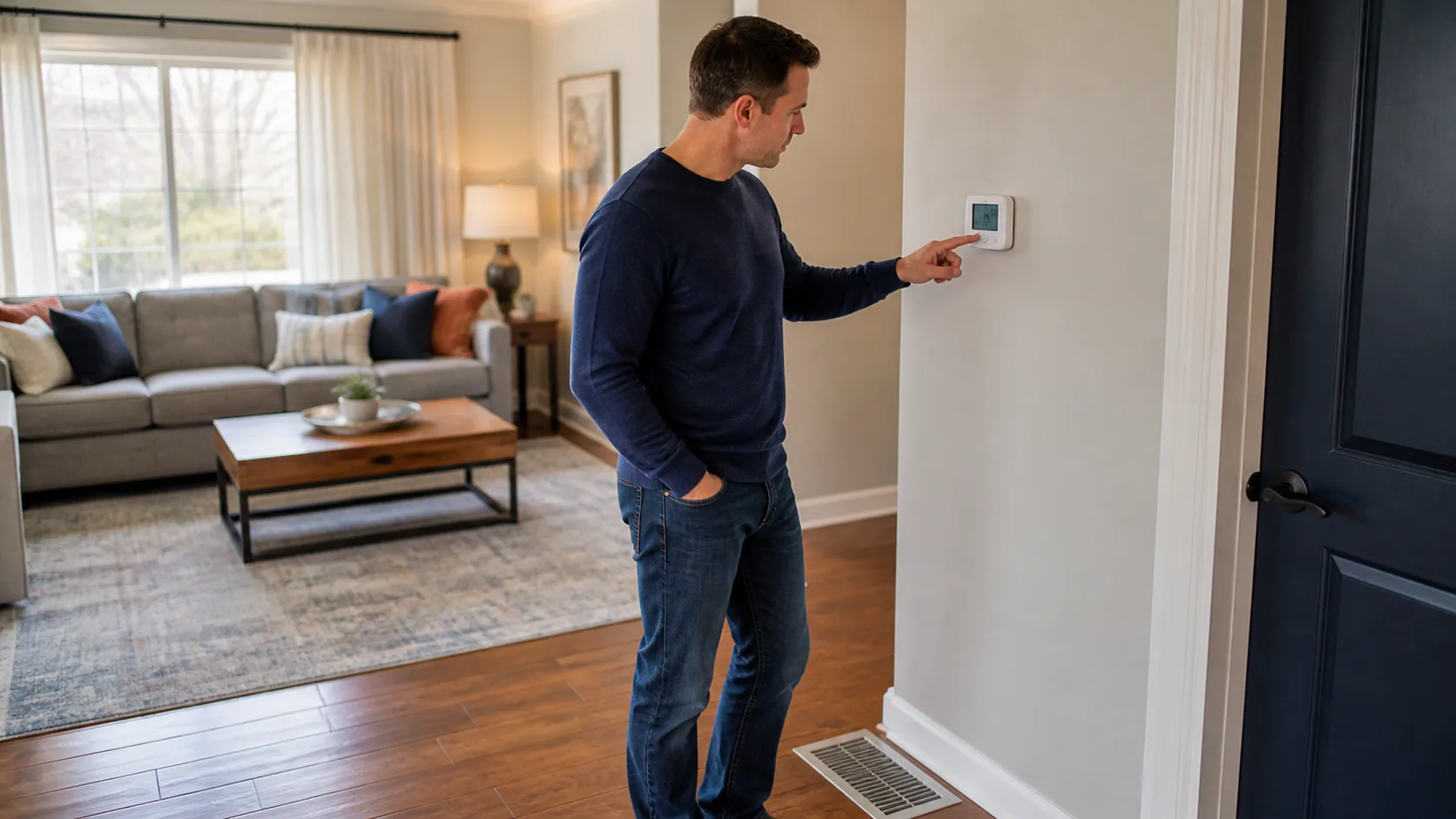
Read the thermostat display. Confirm that the system is set to HEAT, the setpoint is above the displayed room temperature, and the fan is set to AUTO rather than ON. Changing an incorrect visible setting may explain the airflow, but it does not prove that a persistent no-heat problem is solved.
Check for a Schedule or Visible Thermostat Message
A programmed schedule may have changed the setpoint, and a thermostat may display a message or code. Write down exactly what you see. Do not guess what a code means without the documentation for the exact thermostat and equipment model, and do not use it as an instruction to bypass or reset anything.
Keep Supply Vents and Return Grilles Open
Make sure accessible supply vents and return grilles are open and not covered by furniture, rugs, boxes, or other ordinary household items. Do not enter an attic or crawlspace, open ductwork, seal joints, or try to rebalance the system.
Look at Only a Routinely Accessible Filter
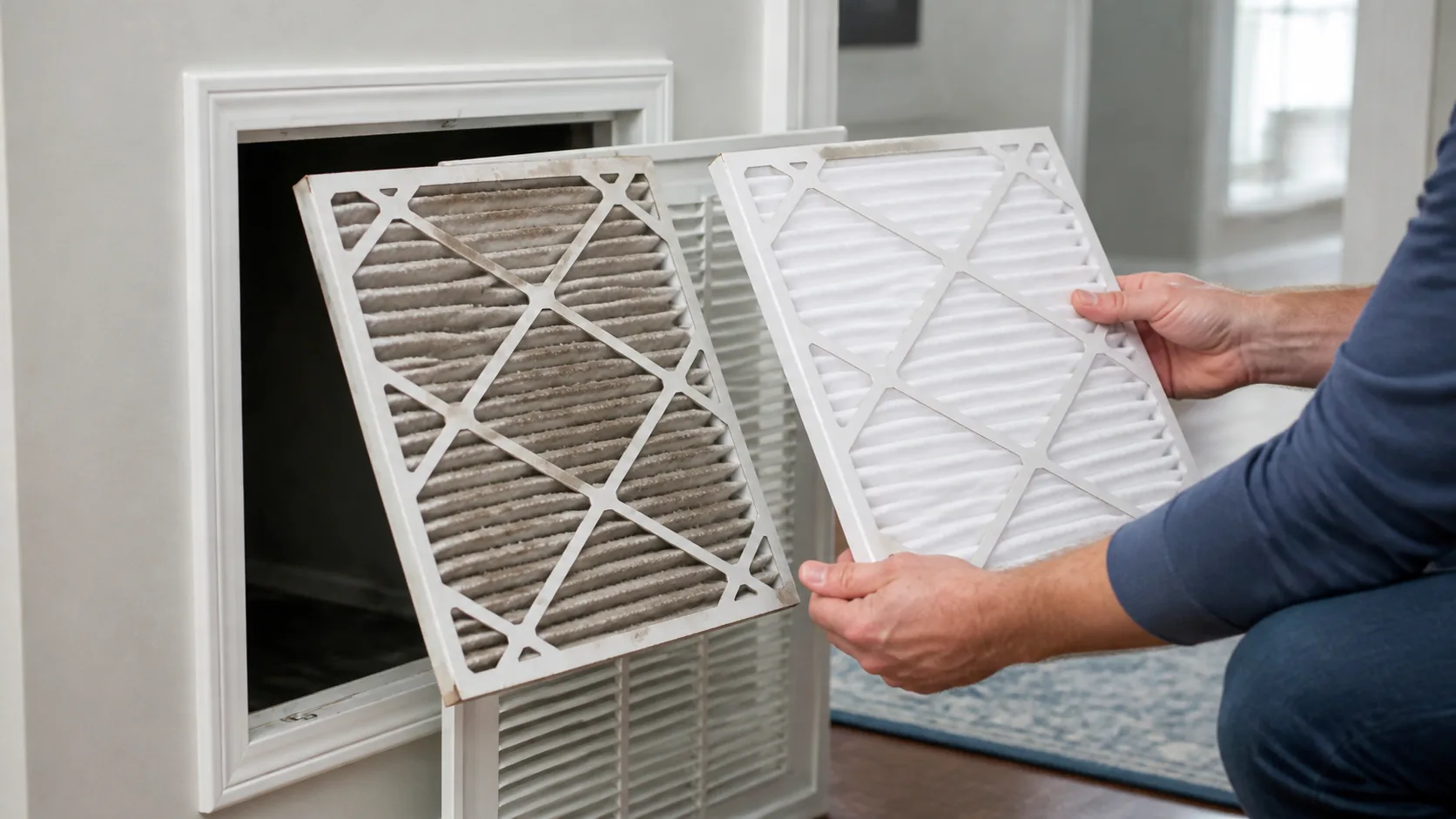
Inspect a filter only when the manufacturer identifies it as routine homeowner access and you can reach it without removing a furnace panel. Follow the equipment manual rather than a universal replacement interval. If cold air began after a filter change, compare the installed filter with the manual’s specified type and orientation. A clean or correctly installed filter does not rule out another cause.
Record the Pattern
Note whether the air is cold immediately, becomes cold after first feeling warm, affects every room or one area, and whether the system repeatedly starts and stops. Record any visible thermostat message and accessible model information. These observations support diagnosis; they are not a diagnosis.
If the settings, vents, and routine-access filter do not explain the symptom and the air stays cold, the next step is professional furnace diagnosis and repair.
Why the Air Can Stay Cold
If a furnace blower is running but no heat reaches the rooms, several categories may be involved. A technician must test the system to determine which one applies.
Restricted Airflow and a Safety Limit Response
Restricted airflow can contribute to overheating. A safety control may then stop heat production while the blower continues moving air to cool the equipment. A heavily loaded filter is one possible contributor, but cold air alone does not prove the filter—or the safety control—is the cause.
Ignition, Pilot, or Flame-Detection Problems
Depending on the furnace design, heat may rely on a standing pilot or electronic ignition and a way to confirm that a flame is present. If that sequence does not complete safely, the blower may still move air without normal heat. Pilot relighting, flame-sensor cleaning, burner access, and gas-valve work are not homeowner steps in this guide.
Control, Switch, or Electrical Problems
The blower and heat source do not always receive the same command at the same moment. A control or electrical condition can therefore produce airflow without heat. The symptom does not identify a board, switch, thermostat, or wire as defective. Proper testing is required, without breaker cycling, wiring work, code interpretation, or control resets by the homeowner.
Fuel Supply or High-Efficiency Condensate Problems
Some heating interruptions involve fuel availability or the water-management safeguards used by certain high-efficiency systems. Those paths belong with a technician or, when a gas-supply issue is suspected, the appropriate utility. Do not test a gas valve, inspect a fuel line, or clear a condensate line as a DIY repair.
Duct Leakage or Distribution Problems
If most rooms warm normally but one area stays cold, the issue may involve how air is distributed rather than the furnace alone. Air can lose heat or mix with unconditioned air before reaching a room. A professional can evaluate airflow and duct conditions without asking you to enter an attic, crawlspace, or open the duct system.
Furnace or Heat Pump? Why the Difference Matters
Homeowners sometimes use “furnace” as a general name for any forced-air heating system. A heat pump can deliver air that feels less hot than furnace air, and its output may change temporarily during a defrost cycle. Controls and auxiliary heat behavior vary by system.
If you are unsure what equipment you have, check accessible paperwork or share visible model information when booking. Persistent cool airflow, loss of comfort, or unusual operation still deserves evaluation. For the broader service paths, visit Capehart’s heating services overview; this article does not provide heat-pump control, defrost, or outdoor-unit repair steps.
Should You Turn the Furnace Off?
The answer depends on what is happening. If a carbon-monoxide alarm sounds or you smell gas, leave the home and follow the emergency actions above. Do not stay inside to operate the equipment.
When there is no immediate safety signal, do not repeatedly restart or reset the furnace. If cold air persists, normal heat does not return, or the furnace repeatedly starts and stops, stop ordinary use and arrange professional diagnosis. Because furnace types and hazards differ, this guide does not provide one universal shutdown sequence. Follow the manufacturer’s instructions or directions given for your specific system.
What to Tell the HVAC Technician
Do not delay evacuation or an emergency call to collect information. If there is no active safety signal, a clear symptom history can help the service conversation begin in the right place. Be ready to share:
- When the cold airflow began
- Whether it is cold at startup or turns cold after first becoming warm
- Whether every room or only one area is affected
- The thermostat mode, fan setting, setpoint, and visible messages
- Whether the system repeatedly starts and stops
- Any equipment information visible without opening a panel
- Any earlier safety signal—but only after emergency responders or the gas authority have made the situation safe
This information supports an on-site assessment; it cannot guarantee a diagnosis by phone or a particular repair outcome.
Can Maintenance Prevent Cold-Air Problems?
Annual furnace maintenance can help identify condition and readiness issues before or during heating season, but it cannot guarantee that a breakdown will not occur. Maintenance is the preventive path for an otherwise operating system. Persistent cold airflow is an active symptom and belongs on the repair path first.
If a professional evaluation later raises broader concerns about an aging system or repeated repairs, you can compare furnace replacement options. Cold air by itself is not a replacement verdict.
Furnace Blowing Cold Air FAQs
Is it normal for a furnace to blow cold air when it starts?
A brief startup draft can be normal on some systems because air already in the ducts may arrive before warmed air. Persistent cold airflow, or heat that never arrives, needs attention. Normal timing varies by equipment, so avoid relying on a universal cutoff.
Why is the blower running when the furnace is not producing heat?
A thermostat fan set to ON can circulate room-temperature air between heating cycles. A safety or control condition can also leave the blower running without normal heat. The airflow pattern alone cannot identify a failed component; testing is required.
Why does the furnace blow warm air and then turn cold?
Restricted airflow and an overheating safety response, loss of ignition, or another control condition can create that pattern. Record when the air changes and whether the system cycles repeatedly, then request diagnosis rather than opening or resetting the furnace.
Can a dirty air filter make a furnace blow cold air?
A heavily loaded filter can contribute to restricted airflow, which may be involved when heating stops and the blower continues. The symptom alone does not prove the filter is responsible. Follow only the manufacturer’s directions for a routinely accessible filter.
Why is my furnace blowing cold air after I changed the filter?
Using the equipment manual, verify only that the routine-access filter is the specified type and orientation and that its normal access area is secure. Do not remove a furnace panel. If cold air continues, stop guessing and request professional diagnosis.
Should I turn off a furnace that keeps blowing cold air?
Do not repeatedly restart or reset a furnace that keeps blowing cold air. If the air stays cold or the system repeatedly starts and stops, stop ordinary use and arrange professional diagnosis. There is no universal shutdown sequence for every system. A gas odor, carbon-monoxide alarm, smoke, soot, or scorching requires the immediate safety action described above, not further troubleshooting.
What should I do if I smell gas or a carbon-monoxide alarm sounds?
For a CO alarm, move outside to fresh air, call 911 or the fire department, and stay out until responders say it is safe. If you smell gas, hear hissing, or suspect a gas leak, leave immediately without operating switches or electronics, including a phone, and do not start a vehicle. Once outside, call 911, the fire department, or the gas authority. Do not re-enter or try to find the source. Emergency responders and the gas authority take precedence over a normal Capehart appointment.
Need Professional Furnace Diagnosis?
Capehart Heating & Cooling is based in Kiefer and serves homeowners throughout the greater Tulsa area. Tell us when the cold airflow began, whether warm air ever arrives, and what the thermostat displays.
Request Furnace Repair Call (918) 771-1218 Contact Capehart
If a carbon-monoxide alarm sounds or you suspect a gas leak, leave first and contact emergency services or the gas authority from a safe location instead of using the normal appointment path.