

When your AC struggles to push cool air, it’s not just uncomfortable; it signals potential issues impacting your home’s energy efficiency and comfort, especially in Tulsa’s demanding climate. You’ll discover the common culprits behind weak airflow, from a clogged air filter—which often requires changing every 1-3 months—to more complex problems like a frozen evaporator coil or a struggling blower motor. Sometimes, the issue lies not with the unit itself but within your home’s air distribution system, where leaky ducts or blocked vents dramatically reduce cooling power. You can learn to perform several safe, simple checks and maintenance tasks to address minor airflow problems and prevent future issues. Ignoring persistent low airflow leads to higher energy bills and a shorter system lifespan, making it crucial to know when a professional HVAC diagnosis and repair are necessary. Maintaining optimal AC airflow is essential for consistent comfort and efficiency, helping you keep your Tulsa home cool and cost-effective.
Understanding Low AC Airflow: Common Causes & Early Warning Signs
Low AC airflow is a common headache we see, often starting with a dirty air filter. The U.S. Department of Energy notes these filters can hike energy use by 5-15%. This forces your system to overwork, costing you comfort and money. It can even lead to calling us for professional air conditioning repair in Kiefer, OK. If air barely trickles from your vents or your AC runs non-stop without cooling, it’s time to investigate. It’s like your AC is trying to run a marathon with a clogged nose. These simple indicators often signal deeper system issues.
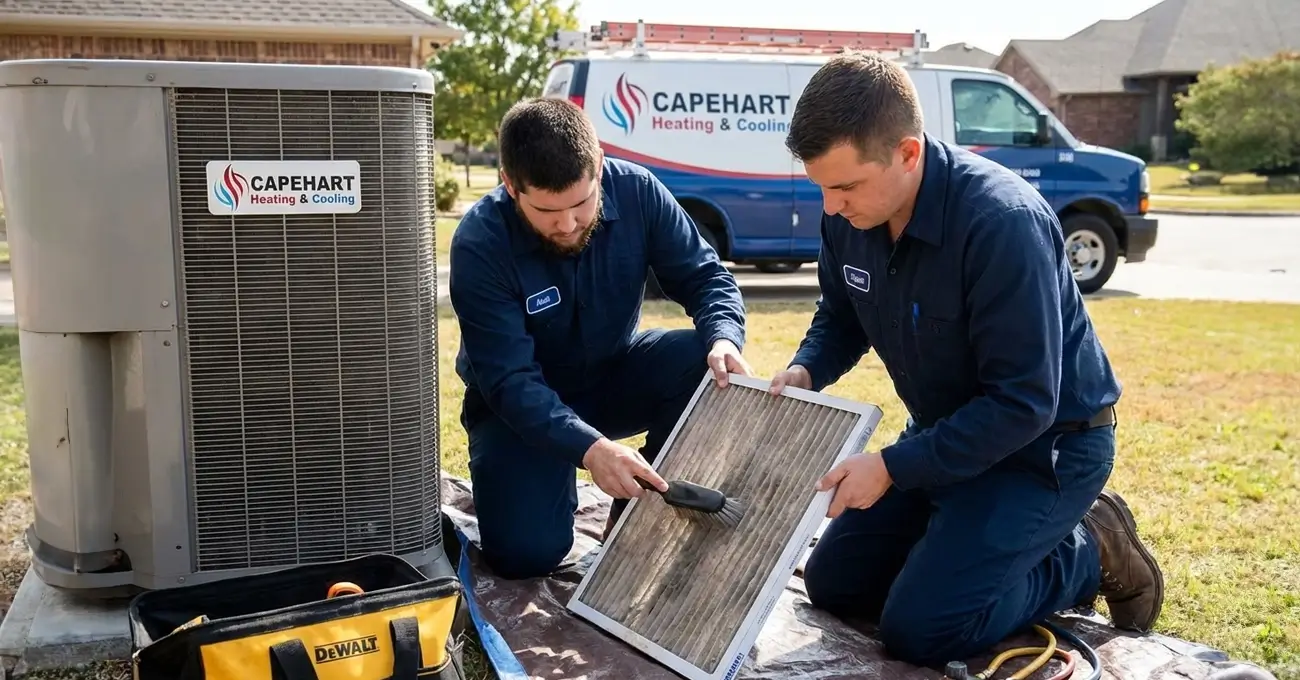
Dirty Air Filter
The #1 cause of low airflow. Clogged filters restrict air, increase energy use 5-15%, and strain your system.
Frozen Evaporator Coils
Ice buildup from low refrigerant or dirt completely blocks airflow and indicates potential leaks.
Failing Blower Motor
A struggling or failing motor directly reduces air circulation throughout your home.
High Humidity
Humid air feels heavier and is harder to move, making your AC struggle to circulate effectively.
Dirty Coils
Dirt acts like insulation on coils, stopping proper heat transfer and reducing cooling capacity.
Low Refrigerant
Insufficient refrigerant causes coils to freeze and prevents proper cooling and airflow.
Frozen Coils and Dirt
Evaporator coils can freeze from low refrigerant or heavy dirt buildup. This completely blocks airflow and often points to leaks. Dirt acts like insulation, stopping proper heat transfer and making your AC struggle. Catching this early prevents bigger repair headaches.
Blower and Humidity
A failing blower motor directly cuts down air circulation. High indoor humidity also makes air feel heavier. Your AC then struggles to move it efficiently, creating a muggy, uncomfortable home. Recognizing these issues helps us understand what your system is really up against.
- Air barely trickles from vents
- AC runs constantly but doesn’t cool
- Some rooms are warmer than others
- Ice forming on outdoor unit or refrigerant lines
- Increased humidity indoors
- Higher than normal energy bills
Beyond the Unit: How Ductwork and Vents Restrict AC Airflow
Ever feel like your AC is running a marathon but only cooling half your house? The real culprits might be hiding in your home’s ductwork and ventilation. Leaky ducts and restricted vents significantly cut down on your system’s ability to deliver cool, comfortable air, making your unit work harder for less relief. It’s not just inefficient; it’s downright unfair to your energy bill.
The Hidden Problem: Leaky Ductwork
A typical Tulsa home can lose 20-30% of conditioned air through leaky flex ducts alone. That’s like paying to cool your attic instead of your living room!
Common Ductwork and Vent Obstacles
Leaky flex ducts alone can cause a typical Tulsa home to lose 20 to 30 percent of its conditioned air, as ENERGY STAR highlights. Beyond leaks, closed dampers restrict airflow to individual rooms, and obstructed return vents stifle circulation. Such common obstacles make your HVAC system struggle, impacting comfort and increasing energy costs. Pinpointing these hidden issues is crucial for maintaining a truly comfortable home.
| Ductwork Issue | Impact on Airflow | Solution |
|---|---|---|
| Leaky duct connections | 20-30% air loss, wasted energy | Professional duct sealing |
| Closed dampers | Blocks airflow to specific rooms | Open and adjust dampers |
| Obstructed return vents | Restricts air circulation system-wide | Clear furniture/obstructions |
| Kinked flex ducts | Severely reduces airflow to affected areas | Straighten or replace ducting |
| Undersized ductwork | System can’t deliver enough air | Professional duct redesign |
DIY Airflow Checks & Preventive Maintenance for Your AC
Is your AC blowing weak? Before calling the Capehart brothers, a few simple DIY checks can often fix minor airflow issues and boost efficiency. It’s like a quick tune-up from your living room – and who doesn’t love saving a service call?
-
Check & Replace Air Filters
Dirty filters are often the culprit. They choke your AC, forcing it to work harder. In Oklahoma’s extreme climate, inspect filters monthly and replace every 1-3 months for peak performance.
-
Clear All Supply Vents
Ensure all supply vents are fully open and unobstructed by furniture, curtains, or rugs. Even partially blocked vents reduce airflow significantly.
-
Check Return Vents
Return vents are equally important – they pull air back to your system. Make sure they’re open and clear of dust buildup or obstructions.
-
Inspect Outdoor Unit
Clear debris, leaves, and vegetation from around your outdoor condenser. Maintain at least 2 feet of clearance for proper airflow.
-
Check for Ice Buildup
Look for ice on refrigerant lines or the outdoor unit. If you see ice, turn off the system and call a professional – this indicates a serious issue.
- Monthly: Inspect air filter, check for visible obstructions
- Every 1-3 months: Replace air filter (more often with pets)
- Seasonally: Clear outdoor unit, check all vents
- Annually: Schedule professional maintenance with CapehartHC
The Cost of Ignoring Low Airflow & When to Call an Expert
When your AC struggles with low airflow, it forces the entire system to work overtime. This reduces energy efficiency, inflates electricity bills, and shortens your unit’s lifespan, leaving your home unevenly cooled. Ignoring these signs means you’re paying more for less comfort and inviting costly repairs or even early system replacement down the road. It’s a frustrating cycle that quickly escalates.
Increased Energy Bills and System Wear
When your AC unit struggles with low airflow, it consumes more electricity just trying to hit your thermostat’s setting. This constant overexertion strains vital components like the compressor and fan motor, leading to faster wear and expensive breakdowns. You end up with a drained wallet, inconsistent temperatures, and poor dehumidification. It’s truly a lose-lose situation that often requires a professional eye.
When It’s Time to Call in the Pros
It’s time to call in a professional when you see persistent low airflow even after changing your filter, if your AC coils freeze, or if your unit makes unusual noises. Sudden spikes in your energy bill also signal deeper issues homeowners can’t fix. Leaving these problems unaddressed risks turning a minor fix into a major system overhaul, so don’t hesitate to schedule AC repair with the Capehart team. Early intervention is key for comfort and efficiency, and we’re always ready to help.
Persistent Low Airflow
Still weak after changing filters? Time for professional diagnosis.
Frozen Coils
Ice on your system indicates refrigerant or airflow problems.
Unusual Noises
Grinding, squealing, or banging sounds need expert attention.
Spiking Energy Bills
Sudden increases indicate your system is working too hard.
What an HVAC Professional Will Do
When you call Bailey or Brock about low airflow, we’ll start with a thorough diagnostic process. This includes inspecting your air filter, evaporator coil, and condenser unit for obstructions, checking refrigerant levels, and assessing your ductwork for leaks or blockages. We also examine the fan motor for proper operation. This comprehensive approach helps us pinpoint the exact cause of restricted airflow, ensuring a precise and effective repair solution. We always aim to get to the root of the problem, so you understand what’s happening every step of the way.
Full Diagnostic
Inspect filter, coils, condenser & all components
Refrigerant Check
Test levels and check for leaks
Ductwork Assessment
Identify leaks, blockages & design issues
Motor Inspection
Ensure blower motor operates correctly
Understanding Repair Costs and Long-Term Savings
Repair costs for low AC airflow vary, from a simple filter change to complex ductwork repairs or coil cleaning, typically between $150 and $450. Remember, we offer honest, flat-rate pricing so you know the full cost upfront. Investing in professional repairs restores your AC’s performance, prevents further damage, and boosts efficiency. This ultimately saves you money on future energy bills and extends your unit’s life. For example, the U.S. Department of Energy states that duct sealing alone can improve system efficiency by up to 20%, proving how much you can save by addressing these issues professionally.
💵 Honest, Flat-Rate Pricing
From simple filter changes to complex ductwork repairs, you’ll know the full cost upfront before any work begins. No surprises, ever.
Ensuring Consistent Comfort in Tulsa’s Climate
Proper AC airflow is crucial for a truly comfortable, energy-efficient home in Tulsa. Our climate demands a well-functioning HVAC system, with scorching summers and sudden cold snaps confirmed by the National Weather Service. Optimal airflow ensures your system cools or heats effectively, preventing discomfort and unnecessary energy waste. Understanding how this vital circulation works can save you headaches and cash.
Why Airflow Matters for Tulsa Homeowners
Consistent airflow combats Tulsa’s extreme temperatures, protecting your home from sweltering summers and unexpected winter chills. Without it, your AC struggles to distribute air, causing uneven temperatures and wasted energy. Sometimes, a simple filter change can fix it. Reliable circulation is key to year-round comfort, avoiding those dreaded hot spots that make you wonder if you’ve accidentally moved into a sauna.
Proudly Serving Tulsa & the Greater Metro Area
Capehart Heating & Cooling is proud to bring expert AC airflow diagnosis and repair to homeowners throughout the Tulsa metro area. Whether you’re dealing with weak airflow, frozen coils, or need a full system checkup, our licensed technicians are ready to help.
Frequently Asked Questions About AC Low Airflow
Low AC airflow becomes an emergency when it leads to immediate health risks or significant damage to your HVAC system. Signs include the AC running constantly without cooling, a burning smell, sparks, or a completely frozen outdoor unit, which could indicate a severe refrigerant leak or electrical fault. If the indoor temperature rises rapidly to unsafe levels, especially during extreme heat, it can pose a danger to occupants, particularly the elderly, children, or those with health conditions, as extreme heat can cause heat-related illness and even death, according to the CDC. A rapidly warming home in intense heat, combined with minimal airflow, warrants immediate professional attention.
Yes, even a newly installed AC system can experience low airflow, often due to installation errors rather than system age. Common culprits include improperly sized ductwork that restricts air movement, leaks in duct connections that allow conditioned air to escape (a common consequence of faulty installation, according to the U.S. Department of Energy), or incorrect system sizing (either too large or too small for the space). Additionally, a new unit might have been charged with the wrong amount of refrigerant or have a manufacturing defect affecting components like the blower motor, leading to insufficient air delivery.
Weak AC airflow in only one room typically points to an issue localized within the ductwork or registers serving that specific area. This could be due to a closed or partially closed damper in the duct system diverting air away from the room, a kink or blockage within a flexible duct run, or an obstructed supply register or return vent. Furniture, curtains, or even children’s toys can block vents, preventing proper air circulation. In some cases, the room might be at the end of a long duct run, naturally receiving less pressure, or the ductwork for that room might be undersized.
Low airflow means that your AC system is still moving some air, but not at the optimal volume or velocity needed to effectively cool your home. This often results in uneven temperatures, longer cooling cycles, and a general feeling of stuffiness. It can stem from issues like a dirty air filter, a partially frozen evaporator coil, or a blower motor struggling to operate at full capacity. In contrast, no airflow signifies a complete cessation of air movement from your vents. This usually indicates a more severe problem, such as a completely failed blower motor, a tripped circuit breaker affecting the indoor unit, or a total system shutdown, requiring immediate diagnosis and repair.
💨 Low Airflow
- Some air still moving
- Uneven temperatures
- Longer cooling cycles
- Stuffiness or humidity
- Causes: dirty filter, partial freeze, weak motor
🚫 No Airflow
- Complete air stoppage
- System not cooling at all
- Usually more severe
- Requires immediate attention
- Causes: failed motor, tripped breaker, shutdown
Modern AC systems incorporate several features designed to optimize and maintain consistent airflow. Variable-speed blower motors, for example, can adjust their speed based on heating or cooling demand, ensuring precise airflow delivery and often improving humidity control, which indirectly helps prevent coil freezing. As a key advantage, these motors contribute to enhanced energy efficiency and consistent home comfort by ensuring proper airflow and performance, as noted by Lennox. Zoned HVAC systems use dampers in the ductwork to control airflow to specific areas of the home, preventing rooms from being over- or under-conditioned. Additionally, properly designed and sealed ductwork, using materials that resist leaks and blockages, is fundamental to preventing airflow restrictions. Regular professional maintenance also plays a crucial role in preventing issues before they impact airflow.
- Dirty filters are the #1 cause – check monthly, replace every 1-3 months
- Leaky ducts can waste 20-30% of conditioned air
- Frozen coils indicate refrigerant or airflow problems – call a pro
- DIY fixes: Change filters, clear vents, check outdoor unit
- Call a pro when: Low airflow persists, coils freeze, unusual noises, or energy bills spike
- Typical repair costs: $150-$450 with flat-rate pricing
- Duct sealing can improve efficiency by up to 20%
Restore Optimal Comfort: Contact Capehart Heating & Cooling
Understanding these nuances of AC airflow can help you identify problems early. When faced with persistent low airflow, knowing when to call a professional ensures your home remains comfortable and your system operates efficiently.
Experiencing frustrating low AC airflow in your Tulsa home not only reduces comfort but can also lead to higher energy bills and increased wear on your system. Timely professional intervention can diagnose the root cause and restore your AC to peak performance. Don’t let a minor issue become a major expense; trust the local experts to ensure your home stays cool and comfortable.
For fast, honest, and expert AC repair and service, reach out to CapehartHC today to schedule an appointment.