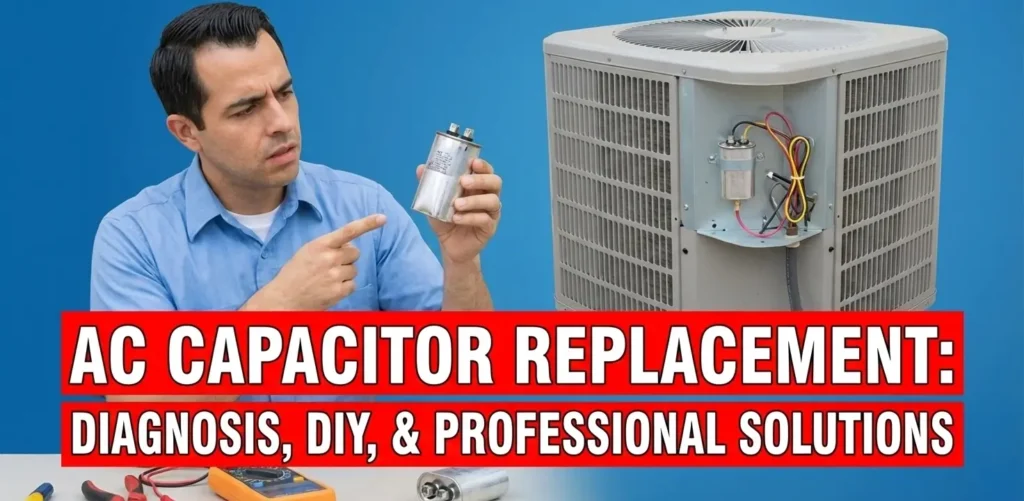
Understanding your AC capacitor is key to maintaining a cool home and avoiding costly repairs, as this small but mighty component drives your air conditioner’s most important functions. You learn how this essential component functions, recognize the clear signs of failure like your fan not spinning or a persistent humming sound, and discover how to safely test it yourself. You then weigh the benefits and significant risks of a DIY replacement against the assurance of professional service, comparing the financial implications of each approach in the Tulsa area. Ultimately, you gain the confidence to make an informed decision, ensuring your AC runs reliably when you need it most, especially during Oklahoma’s extreme temperatures.
Your AC Capacitor: Powering Through Oklahoma’s Heat
Think of your AC capacitor as the unsung hero of your air conditioning unit, giving it the crucial jolt it needs to kickstart the compressor and fan motors. Without its ability to store and discharge energy, your AC wouldn’t even hum to life, much less keep your home cool during those scorching Oklahoma summers.
Why AC Capacitors Fail (And How Long They Last)
Those brutal Oklahoma temperatures and constant electrical stress are tough on your AC’s capacitor. Over time, the internal fluid can dry out, reducing its charge capacity and hindering your AC’s performance. A failing capacitor is one of the most common issues we see, often leaving homeowners without cool air when they need it most. In fact, a faulty capacitor is a frequent issue in AC units that often requires immediate repair.
| Cause of Failure | How It Happens | Prevention |
|---|---|---|
| Extreme Heat | Oklahoma’s 100°F+ summers accelerate wear | Shade outdoor unit, annual maintenance |
| Electrical Stress | Constant start/stop cycles strain the capacitor | Avoid short-cycling, proper sizing |
| Power Surges | Lightning or grid spikes damage components | Surge protector for HVAC |
| Age/Wear | Internal fluid dries out over 5-20 years | Regular inspections |
| Overheating | Poor airflow causes excess heat buildup | Keep outdoor unit clear |
Symptoms of a Bad AC Capacitor: What to Look (and Listen) For
When your AC capacitor starts to fail, you might notice the outdoor unit’s fan struggling, short cycling, or making odd humming and clicking sounds. Ignore this electrical strain, and you risk severely stressing components like the compressor, leading to costlier AC repairs down the line—nobody wants that kind of surprise during a Tulsa summer heatwave. Recognizing these warnings quickly is your best defense against bigger problems.
Fan Won’t Spin
Outdoor fan struggles to start or won’t spin at all, even when AC is running.
Humming Sound
Persistent humming from the outdoor unit indicates motor struggling to start.
Short Cycling
AC turns on and off frequently, unable to complete a normal cooling cycle.
Clicking Sounds
Repeated clicking when trying to start indicates electrical connection issues.
No Cool Air
System runs but doesn’t produce cold air – compressor may not be starting.
Slow Start
AC takes a long time to kick on or needs multiple attempts to start.
Importance of Early Detection
Catching these signs early is key. Waiting too long can turn a minor fix into a major headache for your AC system. That’s why timely AC repair in Tulsa is vital to keep your home comfortable and avoid extensive breakdowns, a task best left to trusted local experts.
- Compressor burnout ($1,500+ to replace)
- Complete system failure
- Much higher repair bills
Testing Your AC Capacitor: A Homeowner’s Guide
Wondering if your AC capacitor is failing? I’ll walk you through how to safely test it with a multimeter, so you know when it’s time to call in the pros. After all, nobody wants their AC to quit in the middle of a Tulsa summer.
Prioritize Safety and Discharge
Before you touch anything, always flip the power off to your outdoor AC unit at the breaker. Then, grab an insulated screwdriver to safely discharge any lingering electricity by bridging the capacitor terminals. This step isn’t just a suggestion; it’s how we keep everyone safe, including our own Capehart team.
- Turn off power at the breaker – not just the thermostat
- Wait 5 minutes for initial discharge
- Use insulated screwdriver to bridge terminals and discharge remaining voltage
- Verify with multimeter that voltage reads zero before touching
Gather Essential Tools
You won’t need a whole toolbox for this. Just two key items: the insulated screwdriver you just used, and a reliable multimeter capable of measuring microfarads (µF).
Insulated Screwdriver
For safely discharging the capacitor before testing
Multimeter (µF capable)
To measure capacitance and compare to rated value
Test with a Multimeter
With your multimeter set to µF, connect the probes to the capacitor terminals. Compare this reading to the capacitor’s rated value. If the numbers don’t match up, or if your unit is nearing its typical 15-year lifespan, it’s likely time for a professional to take a look. Catching these issues early can prevent a complete system breakdown when that Oklahoma heat hits hardest.
- Set multimeter to capacitance (µF) – Look for the symbol that looks like –|(–
- Remove wires from capacitor – Note which wire goes where (take a photo!)
- Connect probes to terminals – Red to one terminal, black to the other
- Read the measurement – Compare to the rating printed on the capacitor
- Evaluate results – Within 5-10% of rated value = good; lower = failing
- Within 5% of rated µF: Capacitor is healthy
- 5-10% below rated µF: Capacitor is weakening – monitor closely
- More than 10% below: Capacitor is failing – replace soon
- No reading or very low: Capacitor is dead – replace immediately
DIY AC Capacitor Replacement: Handle With Care
Thinking of a DIY AC capacitor fix? I understand the urge for a quick solution when your unit quits. But these jobs involve high voltage; one slip risks electrical shock or worse, damaging your entire AC system. The Capehart brothers know some repairs are always better for licensed pros. Safety is job one.
Prioritize Safety
Always kill the power at the breaker first. Capacitors hold dangerous charges, even when off. A study from Electrical Safety First reports nearly half of severe shocks are from DIY mistakes. Discharge it safely with an insulated screwdriver if you proceed. Still, matching the part precisely is next.
The Danger is Real
AC capacitors store enough voltage to cause serious injury or death. Nearly 50% of severe electrical shocks come from DIY electrical work.
Match the Replacement
Capacitors have specific microfarad (Mfd) and voltage ratings. Your replacement must be an exact match, or you risk damaging your AC system further. Getting this wrong invites disaster, making careful installation paramount.
| Specification | What It Means | Why Matching Matters |
|---|---|---|
| Microfarads (µF or Mfd) | Electrical storage capacity | Wrong value = motor damage or won’t start |
| Voltage Rating | Maximum voltage it can handle | Too low = capacitor explodes; too high = won’t work properly |
| Terminal Configuration | HERM, FAN, C (dual-run) or 2-terminal (single) | Wrong type won’t connect correctly |
Install Carefully
Transfer wires one-by-one to the new capacitor, double-checking connections. Improper wiring causes system failure or serious electrical hazards. Small mistakes lead to big, costly repairs. While DIY appeals, the risks are high. Professionals like the Capehart brothers ensure safe, correct work every time.
Common DIY Mistakes to Avoid
- Not discharging the capacitor – Risk of severe shock
- Wrong capacitor specs – Damages compressor or fan motor
- Mixing up wires – System won’t work or shorts out
- Forgetting to photograph connections – Can’t remember what goes where
- Touching terminals with bare hands – Shock hazard
- Leaving power on during work – Extremely dangerous
AC Capacitor Replacement: DIY vs. Pro Service
Replacing an AC capacitor? DIY parts cost under $30, which sounds easy. But professionals, like the Capehart team, deliver expert labor, diagnostics, and a guaranteed installation, ensuring your system’s safety and long-term performance. It’s about more than just the part; it’s about a cool, worry-free home.
The DIY Appeal vs. Professional Assurance
DIY offers the allure of low upfront part cost. However, professional service with licensed experts like Bailey and Brock brings unmatched safety, precise diagnostics, and peace of mind for your home’s HVAC system. It’s the difference between a quick fix and a lasting solution, especially with Oklahoma’s unpredictable climate.
🔧 DIY Replacement
- Cost: ~$15-30 for part
- Risk: Electrical shock, system damage
- Warranty: None
- Diagnostics: Limited to visual/basic
- Time: Variable (learning curve)
- Best for: Experienced DIYers only
👨🔧 Professional Service
- Cost: Higher upfront, includes labor
- Risk: Minimal – trained technicians
- Warranty: Parts and labor guaranteed
- Diagnostics: Full system check included
- Time: Fast, efficient service
- Best for: Most homeowners
Navigating DIY Capacitor Replacement
Going the DIY route for a capacitor replacement often means paying only for the part, usually under $30. Yet, this path comes with significant risks. The Electrical Safety Foundation International warns against potential electrical hazards and system damage from improper installation.
Choosing Professional AC Capacitor Service
Opting for professional AC capacitor service means getting the job done right. Our EPA-certified technicians handle the complex diagnostics and guarantee a safe, expert installation. This protects your system from damage and keeps your family comfortable, especially during those scorching Oklahoma summers.
Benefits of Professional Capacitor Service
- Safe handling of high-voltage components
- Correct part matching guaranteed
- Full system diagnostic – catch other issues early
- Warranty protection on parts and labor
- No risk of DIY damage to your system
- Peace of mind knowing it’s done right
Finding the Best Solution for Your Home
While DIY saves on immediate costs, professional service prioritizes safety and guarantees expertise. For dependable AC repair in Tulsa and peace of mind, choosing a trusted professional like Capehart Heating & Cooling is always the smartest move. This ensures your home stays cool and comfortable.
When to Call a Professional for AC Capacitor Issues in Oklahoma
Look, AC capacitor issues are not a DIY project. These components store hundreds of volts, even when unplugged, creating a serious electrocution risk. Trust us; you don’t want that kind of shocking surprise. Care Heating and Cooling, Inc. reports they can hold 370 to 440 volts. Attempting DIY repairs risks severe injury or permanent system damage, especially when Oklahoma’s extreme temperatures demand flawless operation from your HVAC system.
Ensure Safety and System Longevity
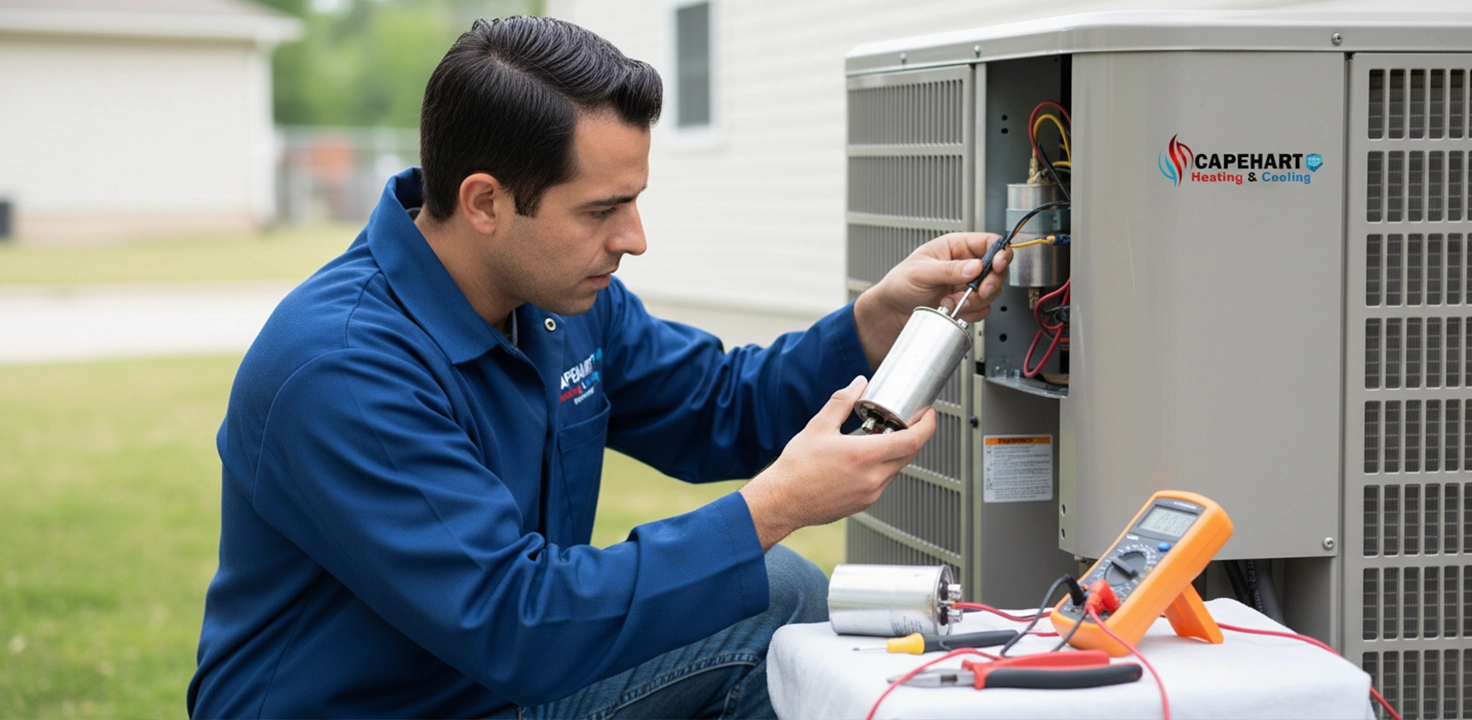
That’s why calling pros like CapehartHC is essential. We prioritize your safety and prevent further system damage, which is crucial during Oklahoma’s scorching summers. Our licensed and EPA-certified experts offer precise diagnosis and repairs, safeguarding your investment and optimizing performance. You can count on our local AC repair services to keep you cool.
Proudly Serving the Greater Tulsa Metro Area
Capehart Heating & Cooling brings expert AC capacitor diagnosis and replacement to homeowners throughout the Tulsa metro area. Whether you’re dealing with a failing capacitor or need a full system checkup, our licensed technicians are ready to help.
Frequently Asked Questions About AC Capacitors
AC capacitors are the vital components in your outdoor unit, giving your compressor and fan motors the electrical kick-start they need. Without this essential jolt, your AC system can struggle to activate, leading to frustrating performance issues or even a full shutdown. No one wants their air conditioning taking a summer vacation in Oklahoma, so these small parts are crucial for keeping your home cool.
Why Do AC Capacitors Fail?
AC capacitors naturally degrade due to constant electrical stress and extreme temperatures. Our intense Oklahoma heat and continuous AC use accelerate their failure, often needing air conditioning repair in Tulsa, OK. That’s why we always recommend regular inspections; they help catch failing capacitors before a complete system breakdown. Proactive maintenance ensures your AC stays strong, even when the heat demands more from other vital components.
AC capacitors usually last between 5 to 20 years, though their lifespan can be shortened by extreme temperatures, frequent cycling, or power surges. Regular maintenance can help identify a weakening capacitor before it completely fails.
Yes, a failing AC capacitor can cause significant stress on other components, potentially leading to more expensive repairs. When a capacitor does not provide enough electrical boost, the AC unit’s fan motor and compressor may struggle to start or run, increasing wear and tear and ultimately leading to premature failure of these vital parts. In some cases, a compressor attempting to start repeatedly without adequate capacitance can overheat and burn out, necessitating a costly replacement of the entire unit or compressor.
The most frequent AC repair related to capacitors is their replacement. Capacitors are crucial for starting and running the compressor and fan motors, and due to wear over time, they often degrade and lose their ability to hold a charge effectively. This makes capacitor replacement one of the most common AC repair jobs performed by HVAC technicians.
AC capacitors typically feature distinct terminal configurations to connect to different components of the HVAC system. The three most common terminals on a dual-run capacitor are labeled “HERM” (for the compressor’s hermetic motor), “FAN” (for the condenser fan motor), and “C” (for common, connecting to the power supply). Single-run capacitors typically have two terminals.
Replacement AC capacitors can be purchased from various sources, including specialized HVAC supply stores, reputable online retailers, or directly through a professional HVAC service provider like CapehartHC. Ensuring the replacement capacitor matches the original unit’s specifications for microfarads (µF) and voltage is critical for proper operation and safety.
No, a dual-run capacitor is not the same as a single-run capacitor. A single-run capacitor serves one motor, providing the necessary electrical boost to start and run a single component, such as a fan motor or a compressor. In contrast, a dual-run capacitor is designed to operate two motors simultaneously: the compressor and the condenser fan motor. It has three terminals, allowing it to manage the electrical needs of both components from a single unit, making it a more compact and integrated solution for many modern AC systems.
- Capacitors store 370-440 volts – even when power is off
- Lifespan: 5-20 years depending on conditions
- Warning signs: Humming, fan not spinning, short cycling, clicking
- Testing: Use multimeter to check µF rating
- DIY risk: High – nearly 50% of electrical shocks are DIY-related
- Pro recommendation: Unless experienced, call a licensed technician
- A failing capacitor can destroy your compressor – $30 part vs. $3,000+ repair
Ensure Your AC Runs Flawlessly
Understanding these common questions about AC capacitors can help you identify potential issues early, and for precise diagnosis and efficient solutions, professional expertise makes all the difference. Ready to ensure your AC is running efficiently?
Don’t let a failing capacitor compromise your comfort or lead to more extensive repairs. Contact Capehart Heating & Cooling for expert AC repair and replacement services and experience reliable, professional care.